Power outages, whether a brief flicker or a days-long blackout, can grind modern life to a halt. From keeping the fridge cold to powering critical medical devices, having a reliable backup power source isn't just a luxury—for many, it's a necessity. But stepping into the world of generators can feel overwhelming, with an alphabet soup of wattage, types, and features. This Generator Sizing & Selection Guide is here to cut through the noise, helping you confidently pick the perfect power partner for your needs.
Think of it as choosing the right tool for the job: you wouldn’t use a hammer to drive a screw, nor would you buy an industrial-grade excavator for a backyard garden. The same principle applies to generators. Matching the right size and type to your specific situation ensures you're prepared without overspending or falling short when the lights go out.
At a Glance: Key Takeaways for Your Generator Quest
- Match Type to Need: Portable generators are great for camping or small outages; inverters excel for sensitive electronics and quiet operation; whole-home standby units provide automatic, seamless power for major outages.
- Calculate Accurately: Your generator's total starting wattage must meet or exceed the combined running watts of all concurrent devices plus the highest single starting wattage required by any motor-driven appliance.
- Safety is Paramount: Always operate generators outdoors, at least 20 feet from your home, and never plug directly into a wall outlet.
- Consider More Than Watts: Factor in fuel type, noise level, portability, and specific outlet needs when making your final decision.
Why a Generator is Your Power Lifeline When the Grid Goes Dark
In an increasingly interconnected world, our reliance on electricity is absolute. A power outage, whether due to a severe storm, an overloaded grid, or a local utility issue, can throw your entire routine into disarray. What starts as an inconvenience quickly escalates when food spoils, heating or cooling systems fail, and communication lines go down. For those with essential medical equipment, the stakes are even higher.
A generator provides more than just electricity; it offers peace of mind. It means keeping your family safe and comfortable, maintaining critical home functions, and staying connected when the rest of your neighborhood is dark. But that peace of mind only comes when you've chosen the right generator—one that's appropriately sized and suited for your unique demands.
Decoding Your Options: The Main Generator Types
Before you dive into wattage calculations, it's essential to understand the fundamental types of generators available. Each serves a different purpose, with varying levels of power, portability, and features.
1. Portable Generators: The Versatile Workhorse
These are likely what you picture when you hear "generator." Portable generators are designed for flexibility, offering power on the go or during home outages. They typically run on gasoline or, less commonly, propane, and require manual setup and starting.
- Ideal for: Camping, tailgating, jobsites, powering essential appliances (refrigerators, lights, sump pumps, some power tools) during home power outages.
- Pros: Generally more affordable than whole-home units, highly versatile, easy to move.
- Cons: Can be noisy, require manual fueling and starting, usually not suitable for sensitive electronics without an inverter upgrade.
2. Inverter Generators: Quiet Power for Sensitive Tech
Inverter generators represent a significant leap in generator technology. They produce AC power, then convert it to DC, and finally "invert" it back to clean AC power. This multi-step process results in a pure sine wave output, making them safe for sensitive electronics like laptops, smartphones, and medical devices.
- Ideal for: RV camping (powering AC units up to 13,500 BTUs), tailgating, backyard events, emergency power for sensitive home electronics.
- Pros: Lightweight and highly portable, significantly quieter than traditional portables, fuel-efficient (adjust engine speed to load), produce clean power.
- Cons: Generally more expensive than conventional portables for the same wattage, output is often more limited.
3. Whole-Home (Standby) Generators: The Seamless Solution
A whole-home or standby generator is a permanent installation, much like an outdoor air conditioning unit. These units typically run on natural gas or liquid propane from your home's existing supply, eliminating the need for manual refueling. When the power goes out, a standby generator automatically detects the outage and kicks on within seconds, providing seamless power to your entire home or selected circuits.
- Ideal for: Automatic, long-term home backup, powering central air conditioning, electric water heaters, multiple large appliances, and critical medical devices for extended periods.
- Pros: Fully automatic, runs on natural gas or propane (no refueling during long outages), highest power output, quiet operation relative to their size, adds home value.
- Cons: Most expensive option, requires professional installation and maintenance, permanent fixture.
- Thinking about a more permanent solution? Exploring the nuances of different generator types can help you decide if a standby unit is right for you, or if you should be comparing generator fuel types for your portable needs.
4. Traditional Open Frame Generators: Robust and Reliable
These generators are a subset of portable generators, often characterized by their exposed engine and components within a metal frame. While they may resemble standard portables, they are distinct from inverter models due to their less refined power output and generally higher noise levels.
- Ideal for: Residential use (general backup), commercial applications, job site power for tools, pumps, and other non-sensitive equipment.
- Pros: Often more affordable than inverter generators for similar wattage, robust and durable.
- Cons: Louder than inverter models, typically not suitable for sensitive electronics without a dedicated voltage regulator or surge protector.
The Wattage Whisperer: Running vs. Starting Power Explained
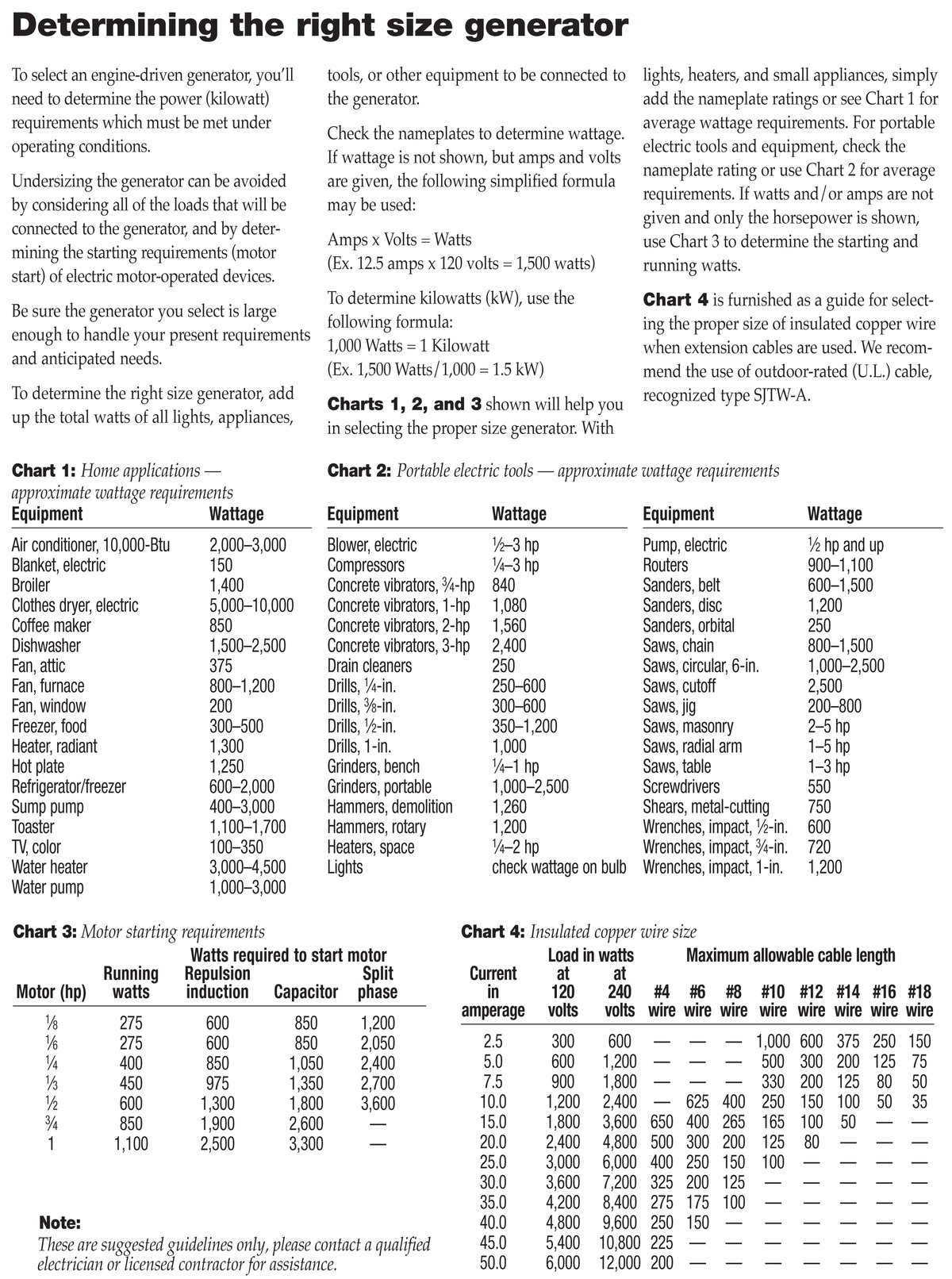
Understanding wattage is the cornerstone of generator sizing. You’ll encounter two critical terms: Running Watts and Starting Watts. Confusing them is a common pitfall, but mastering them is simple.
- Running Watts (Rated Watts): This is the continuous power a device needs to operate once it’s turned on. Your refrigerator, for instance, might consume 800 running watts to keep its motor humming and its contents cold. This is the baseline power draw.
- Starting Watts (Surge Wattage): Many appliances, especially those with motors (like refrigerators, air conditioners, well pumps, or power tools), require a brief, higher burst of power to start up. This surge can be two to three times their running wattage, but it only lasts for a fraction of a second or a few seconds before settling back down to the running wattage.
Think of it this way: When you push a heavy car, it takes a lot more initial effort (starting watts) to get it rolling than it does to keep it moving once it's already in motion (running watts). Your generator needs to handle both the consistent "rolling" power and the occasional "push" power.
Your Step-by-Step Generator Sizing Worksheet
Ready to crunch some numbers? This straightforward method will help you determine the minimum wattage your generator needs to confidently power your essential items.
Step 1: List Your Essentials
First, make a comprehensive list of every device, appliance, and light you absolutely need to power simultaneously during an outage. Be realistic. Do you need the central air and the electric dryer at the same time? Probably not for an emergency. Focus on what's critical.
Example List:
- Refrigerator
- Lights (a few key lamps or ceiling fixtures)
- Sump Pump
- Microwave
- Laptop charger
- Phone charger
- Small TV
- Coffee Maker
Step 2: Determine Total Running Watts
For each item on your list, find its running wattage. You can usually find this information on the appliance's data plate (a sticker or metal plate on the back or bottom), in its owner's manual, or sometimes on the manufacturer's website. If you only find Amps and Volts, you can calculate Watts: Watts = Volts x Amps.
Add up the running watts for all devices you plan to power at the same time.
Example Calculation (Part 1 - Running Watts):
- Refrigerator: 800 Running Watts
- Lights (2 x 60W bulbs): 120 Running Watts
- Sump Pump: 1500 Running Watts
- Laptop Charger: 100 Running Watts
- Phone Charger: 20 Running Watts
- Small TV: 150 Running Watts
- Coffee Maker: 800 Running Watts
- TOTAL RUNNING WATTS = 800 + 120 + 1500 + 100 + 20 + 150 + 800 = 3500 Running Watts
Step 3: Pinpoint the Biggest Starting Surge
Now, review your list and identify which single appliance with a motor (refrigerator, sump pump, microwave, etc.) has the highest starting wattage. You only need to account for one starting surge at a time because it's unlikely all motor-driven appliances will start simultaneously.
Example Calculation (Part 2 - Starting Watts):
Let's assume the starting watts for our motor-driven items are:
- Refrigerator: 2000 Starting Watts (vs. 800 Running Watts)
- Sump Pump: 3000 Starting Watts (vs. 1500 Running Watts)
- Microwave: (Not on our "always on" list, but if it were, let's say 1500 Starting Watts)
In this example, the Sump Pump has the highest starting wattage at 3000 watts.
Step 4: The Magic Number: Minimum Starting Watts Needed
Finally, add your Total Running Watts (from Step 2) to the Highest Single Starting Watts (from Step 3). This sum is the minimum starting wattage your generator needs to provide to run everything on your list and successfully start the most demanding motor-driven appliance.
Example Calculation (Part 3 - Total Starting Watts Needed):
- Total Running Watts: 3500 Watts
- Highest Single Starting Watts (Sump Pump): 3000 Watts
- MINIMUM GENERATOR STARTING WATTS = 3500 + 3000 = 6500 Starting Watts
Based on this example, you would need a generator rated for at least 6500 starting watts (and it would also need to provide at least 3500 running watts). It's always a good idea to add a little buffer (e.g., 10-20%) to your final calculation for unforeseen needs or efficiency drops.
Matching Power to Purpose: What Wattage Category Fits You?
Generators are typically categorized by their wattage output, helping you quickly narrow down your options once you have your sizing number.
Small Generators (1,000-3,000 Starting Watts / 500-3,000 Running Watts)
These compact and portable units are perfect for minimal power needs.
- What they power: Laptops, phone chargers, lights, fans, mini-fridges, small power tools, portable heaters.
- Ideal for: Camping, tailgating, basic emergency home backup (keeping a few essential items running), small jobsites.
- Example Use: A 2000-watt inverter generator could power a mini-fridge, a few lights, and charge your devices while enjoying the outdoors.
Medium Generators (3,000-8,000 Starting Watts / 3,100-6,000 Running Watts)
This category offers a versatile balance of power and portability, suitable for more substantial tasks.
- What they power: Refrigerators, freezers, sump pumps, well pumps, window air conditioners (up to 13,500 BTUs), microwaves, TVs, several lights, power tools.
- Ideal for: Home backup (covering key circuits), RV camping, small-to-medium construction sites.
- Example Use: A 5000-watt portable generator could keep your refrigerator, sump pump, and a few critical lights running during a home outage, or power your RV's AC and microwave. When you're considering generators for RVs and recreational use, always double-check the BTU rating of your AC unit.
Large Generators (Above 8,000 Starting Watts / 6,100-10,000+ Running Watts)
These heavy-duty generators are designed for significant power demands, often nearing whole-house capabilities.
- What they power: Central air conditioning units, electric water heaters, multiple large kitchen appliances, multiple power tools, welders, concrete mixers.
- Ideal for: Extensive home backup (running most household circuits), large construction projects, food trucks.
- Example Use: A 10,000-watt generator could manage a central air conditioner, a refrigerator, and several other essential home appliances, providing near-normal living conditions during a prolonged outage. If you're looking for serious power, you might want to Explore Home Depot generators in this larger category.
Beyond the Watts: Smart Selection Considerations
While wattage is king, it's not the only factor. A truly informed decision takes into account several other practical aspects.
Fuel Type
Generators run on various fuels, each with pros and cons:
- Gasoline: Most common, widely available, but less stable for long-term storage and can be scarce during widespread outages.
- Propane (LP): Burns cleaner than gasoline, stores indefinitely, often used for standby generators. Tanks can be cumbersome for portable units.
- Natural Gas: Only for standby generators, directly connected to your home's gas line, so no refueling needed. Not affected by gas station availability.
- Diesel: Efficient and durable, often found in larger commercial generators, but fuel can be expensive and hard to store.
- Dual-Fuel: Can run on both gasoline and propane, offering flexibility.
Noise Level
Measured in decibels (dB), generator noise can range from a quiet hum to a loud roar. Inverter generators are significantly quieter (50-60 dB, comparable to a normal conversation) than traditional portable generators (70-80 dB, similar to a vacuum cleaner or lawnmower). Standby generators, while powerful, are often placed further from living areas, making their noise less intrusive.
Portability
If you plan to move your generator frequently (camping, job sites), look for models with wheels, fold-down handles, and a manageable weight. Inverter generators are often the lightest and most portable.
Outlets and Connections
Check that the generator has the right types and number of outlets for your needs:
- 120V Outlets: Standard household outlets.
- 240V Outlets: For larger appliances like central AC or electric dryers.
- GFCI Outlets: Ground-Fault Circuit Interrupter outlets offer added safety against electrical shock.
- USB Ports: Convenient for charging small electronics.
Automatic Start & Remote Start
Standby generators offer automatic startup when power is lost. Some portable models include electric start (push-button) or remote start key fobs for convenience, eliminating pull-cord starting.
Maintenance & Reliability
Consider the reputation of the brand, availability of service, and ease of maintenance. Regular upkeep, like oil changes and filter replacements, is crucial for longevity. For instance, knowing common maintenance tips for your portable generator can significantly extend its lifespan and ensure it's ready when you need it most.
Powering Up Safely: Non-Negotiable Generator Safety
Owning a generator comes with responsibilities. Misuse can lead to serious injury or death. These safety rules are non-negotiable.
- Carbon Monoxide (CO) Kills: Generators emit carbon monoxide, an odorless, colorless, deadly gas. NEVER run a generator indoors, in a garage, basement, shed, or partially enclosed space. Even with open doors, CO can accumulate.
- Maintain Distance: Always operate your generator outdoors and at least 20 feet away from your home, windows, and vents. Position it so exhaust fumes blow away from occupied buildings.
- Proper Connection: Avoid Backfeeding: Never plug a generator directly into a wall outlet in your home (this is called "backfeeding"). Backfeeding sends electricity back into the utility lines, potentially electrocuting utility workers or neighbors. Always hire a qualified electrician to install a transfer switch if you plan to power your home's electrical system directly. A transfer switch safely isolates your home from the utility grid before connecting to the generator. Understanding the importance of a transfer switch is critical for safe home backup.
- Don't Overload: Ensure your generator is rated to handle the total wattage of all connected appliances. Overloading can damage the generator and the appliances, and can lead to overheating and fire.
- Refuel Safely: Allow gas-powered generators to cool down completely before refueling. Gasoline is highly flammable, and spilled fuel on a hot engine can ignite. Do not overfill the tank as fuel expands.
- Protect from Weather: Do not operate a generator in rain, snow, or wet conditions unless it is within a purpose-built, open-sided, well-ventilated generator enclosure or canopy designed for weather protection.
Your Generator Checklist: Ready to Choose
Before you make your final purchase, run through this quick checklist to ensure you've considered all the angles:
- Sizing Done? Do you know your required running watts and starting watts?
- Type Match? Have you chosen the generator type that best suits your primary use (portable, inverter, standby)?
- Fuel Preference? Which fuel type works best for your storage, availability, and convenience needs?
- Noise Tolerance? Is the expected noise level acceptable for your intended use and neighbors?
- Portability Needs? Do you need a lightweight, wheeled unit, or will it be stationary?
- Outlet Requirements? Does it have all the necessary 120V, 240V, and specialty outlets?
- Safety Plan in Place? Do you have a safe operating location, proper extension cords, and a plan for professional transfer switch installation if needed?
- Budget & Features? Does the generator fit your budget while offering the features you value most (e.g., electric start, fuel gauge)?
Making Your Power Choice with Confidence
Choosing the right generator means you're prepared, not panicked, when the unexpected happens. By taking the time to accurately size your needs, understand the different types, and prioritize safety, you'll make an investment that brings genuine security and peace of mind.
Don't hesitate to consult with an electrician or generator specialist for complex home backup installations or if you're unsure about specific wattage requirements for unique appliances. With a little planning and the right information, you'll soon have the perfect power solution for your home, adventures, or worksite, keeping your lights on and your life running smoothly, no matter what the grid throws your way.