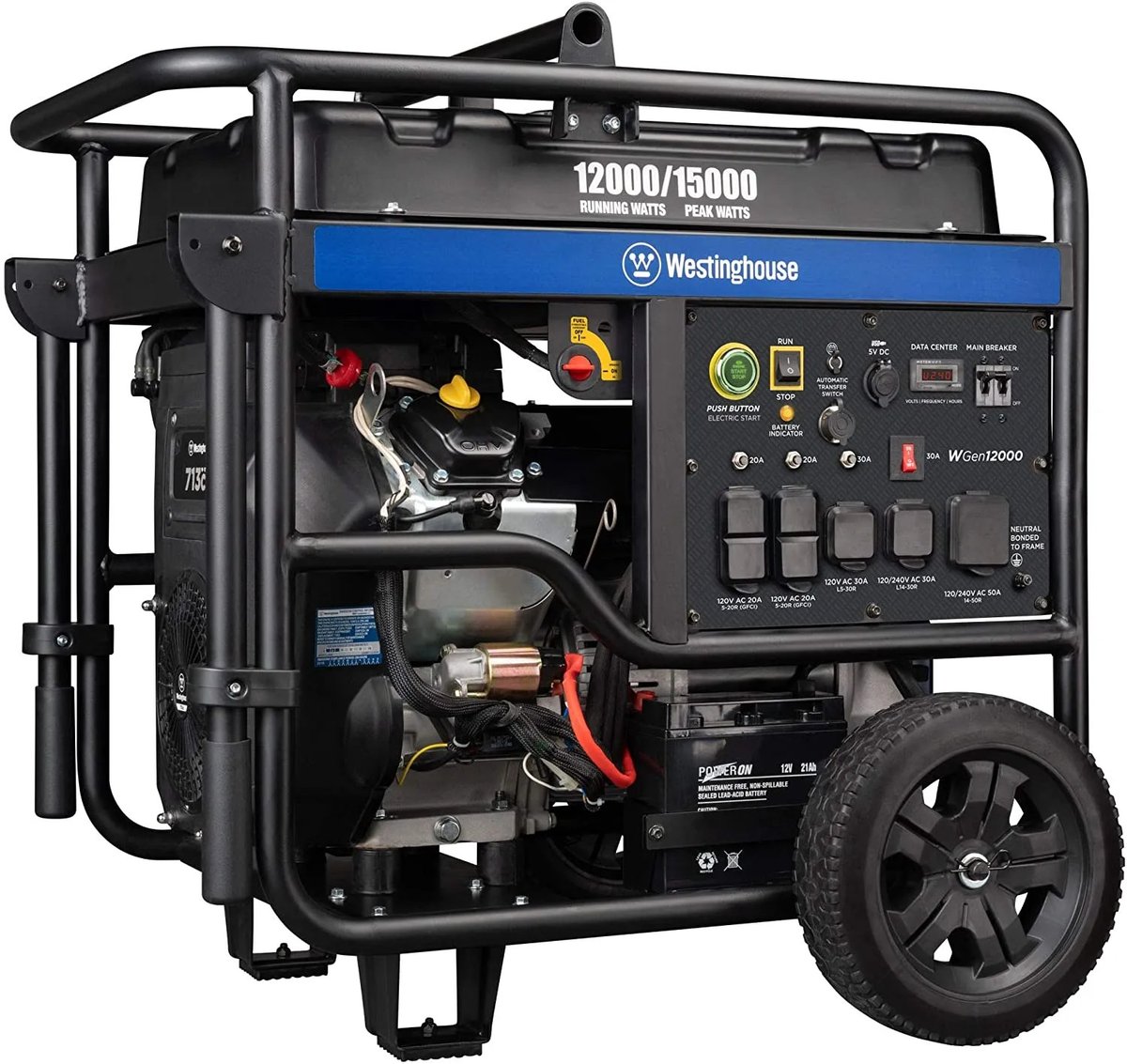
In today's unpredictable world, a reliable power source isn't just a luxury—it's a necessity. Whether you're preparing for unexpected outages, powering an off-grid adventure, or simply need portable electricity for your job site, Home Depot offers a vast selection of generators designed to keep your life running smoothly. This comprehensive guide will help you navigate the options, understand the critical factors, and ultimately choose the perfect generator from Home Depot that meets your specific power demands.
Navigating the world of generators can feel overwhelming, but with the right information, you'll feel confident in your decision. We're here to break down everything from different fuel types to noise levels, ensuring you pick a generator that's not just powerful, but also practical for your home and lifestyle. Let's get started on finding your ultimate power solution.
Understanding Your Power Needs: Why a Generator?
Before diving into specific models, it’s essential to clarify why you need a generator. Is it for emergency home backup, ensuring your refrigerator, lights, and essential medical devices stay on during a storm? Perhaps you're an avid camper or tailgater needing portable power for electronics, or a professional requiring robust tools at a remote construction site. Your primary use case will heavily influence the type, size, and features you should prioritize.
Home Depot understands these diverse needs, stocking a range that caters to every scenario. From compact units perfect for a weekend away to powerful machines capable of running your entire household, the options are extensive. Once you pinpoint your main purpose, the selection process becomes much clearer.
Key Factors When Choosing Your Home Depot Generator
Selecting the right generator involves more than just picking the first one you see. There are several critical factors that differentiate models and impact their suitability for various applications. By carefully considering these, you can ensure your investment genuinely meets your expectations and provides reliable power when you need it most.
Here are the primary considerations to keep in mind as you explore Home Depot's generator offerings:
- Power Output Options: Generators are rated by watts, indicating how much power they can produce. Small portable models typically offer 2,000–4,000 watts, ideal for camping or powering a few essential appliances. For significant home backup, heavy-duty units delivering 10,000–13,000 watts are often required.
- Fuel Type Flexibility: Many generators run on gasoline, but dual-fuel models offer the added convenience of switching between gasoline and propane. This flexibility can be a lifesaver if one fuel source becomes scarce, or if you prefer the longer shelf life and cleaner burn of propane.
- Noise Level Considerations: Noise is a significant factor, especially for residential use. Inverter generators are renowned for their quiet operation, often falling under 70 dB, which is comparable to a normal conversation. Traditional conventional generators can be much louder, so always check the decibel rating.
- Ease of Start: Nobody wants to wrestle with a stubborn engine during an emergency. Look for features like electric push-button start or even remote start for ultimate convenience. Manual pull-start is a reliable backup but requires more physical effort.
- Portability and Design: If you plan to move your generator frequently, portability is key. Features like foldable handles, never-flat wheels, and compact frames make a big difference in maneuvering heavier units.
- Safety Features: Modern generators come equipped with crucial safety measures. Built-in CO (carbon monoxide) sensors are vital for preventing accidental poisoning, while automatic low-oil shut-off systems protect the engine from damage due to insufficient lubrication.
- Run Time and Efficiency: How long can your generator power your essentials on a single tank of fuel? Ideal models offer 8–12 hours of continuous power, providing ample run time without constant refueling.
- Maintenance and Durability: A generator is a long-term investment. Models featuring a cast-iron sleeve or a full metal frame tend to be more durable. An hour meter helps you track maintenance intervals, ensuring your generator remains in top condition for years to come.
- Warranty and Support: Always review the manufacturer's warranty and Home Depot's return policies for peace of mind. Robust warranty coverage signals manufacturer confidence in their product.
To gain a deeper understanding of the different categories and how they align with specific needs, it's worth exploring the nuances between them. We break down the key characteristics and ideal scenarios for each in our dedicated guide where you can Discover generator types and uses Explore in detail.
Sizing Your Generator for Maximum Effectiveness
Perhaps the most critical step in generator selection is ensuring you get the right size. An undersized generator won't power your essential appliances, while an oversized one is an unnecessary expense. The goal is to match the generator's output (in watts) to your specific power requirements, considering both running watts and starting (surge) watts.
To accurately size your generator, follow these steps:
- Calculate Total Power Requirements: List all essential appliances you wish to power (e.g., lights, refrigerator, HVAC, water pump, communication devices). Determine the running wattage for each item, usually found on a label or in the owner's manual.
- Consider Starting Wattage: Appliances with motors, such as refrigerators, air conditioners, and well pumps, require a significantly higher surge of power to start up than they do to run continuously. This "starting wattage" can be 2-3 times their running wattage.
- Factor in Surge Capacity: Ensure the generator's maximum surge capacity can handle temporary spikes when multiple motor-driven appliances start simultaneously. You don't want your generator to trip an overload just as your fridge kicks on.
- Consult Resources: Utilize manufacturer sizing guides or online calculators. For whole-home backup, it's highly recommended to consult a qualified electrician or generator specialist who can provide precise calculations and installation advice.
- Plan for Future Expansion: If you anticipate adding more appliances or increasing your power needs in the future, choose a generator with a little extra capacity.
For instance, running a central AC unit is a common requirement. A 12,000 BTU/hr AC unit might require around 3,514 running watts, but its starting wattage could be much higher. A 22kW (22,000 watts) generator is typically sufficient for medium to large homes, but its exact suitability always depends on your specific appliance load and starting surges. Don't leave this crucial step to guesswork; a dedicated resource can simplify the process, helping you Generator Sizing Guide Select Your Generator with confidence.
Top-Rated Generators Available at Home Depot
Home Depot carries a wide array of generators from leading brands, each offering unique strengths. Based on performance, features, and customer satisfaction, here are some of the standout models you'll find for various needs:
- Westinghouse 7500DF (Best Dual-Fuel Power): A robust choice delivering 7500 running watts (gasoline) / 6750 running watts (propane), with peak watts up to 9500 (gasoline) / 8550 (propane). It features a 420cc 4-stroke OHV engine, electric push-button and remote start, CO shutdown, and GFCI-protected outlets, making it excellent for residential backup and outdoor use.
- DuroMax XP13000HX (Best Whole-Home Power): This beast provides 13,000 starting watts and 10,500 running watts, powered by a 500cc OHV DuroMax engine. With dual-fuel capability, electric start, and a CO Alert system, it’s designed to support an entire household or heavy-duty job sites, though its 245-pound weight limits frequent movement.
- Honda EU2200i (Best Quiet Performance): For those prioritizing silence and portability, this compact inverter generator offers 2200 watts of clean power. Weighing just 51 pounds, it's perfect for sensitive electronics, camping, or small household appliances, thanks to its 121cc 4-stroke Honda engine and CO-Minder system.
- Westinghouse 12500DF (Best High-Power Dual Fuel): Engineered for serious residential backup, this model boasts 9500 running watts (gasoline) / 8500 running watts (propane), with peak watts up to 12,500 (gasoline) / 11,200 (propane). Features include a 457cc engine, up to 12 hours runtime, remote start key fob, 50A RV-ready, and transfer switch-ready ports, making it highly versatile despite its 225-pound weight.
- DuroMax XP13000EH (Best Heavy-Duty Dual Fuel): Similar to its HX counterpart, this model delivers 13,000 starting watts and 10,500 running watts, operating on either gasoline or propane. With an all-metal frame and electric start, it's built for demanding conditions and whole-home backup.
Each of these generators offers unique advantages, catering to different power needs and priorities. For a more comprehensive breakdown of these and other highly-rated models, including in-depth reviews and comparisons, be sure to explore our detailed guide on the Top Generator Brands & Models.
Beyond the Purchase: Installation, Safety, and Maintenance
Once you've selected your ideal generator, the journey doesn't end there. Proper installation, diligent safety practices, and routine maintenance are crucial for ensuring your generator operates reliably and safely for years to come. Home Depot offers services and accessories to support you every step of the way.
For larger, whole-home standby generators, professional installation is not just recommended, but often required to ensure compliance with local codes and safe operation, including proper transfer switch integration. Even for portable units, understanding safe placement (always outdoors, away from windows and doors) and correct fueling procedures is paramount to prevent carbon monoxide poisoning and fire hazards. Discover how Home Depot can assist you with getting your new power solution up and running smoothly, by looking into Home Depot Generator Installation & options.
Regular maintenance, such as checking oil levels, replacing air filters, and inspecting spark plugs, will significantly extend your generator's lifespan. An hour meter, often a built-in feature, helps you track these essential service intervals. Additionally, investing in the right accessories—like heavy-duty extension cords, fuel stabilizers, and weather-resistant covers—can enhance both the performance and longevity of your unit. To ensure you're fully prepared for safe operation and long-term care, we've compiled a comprehensive resource on Generator Safety, Maintenance & Accessories.
Your Power, Your Peace of Mind
Choosing the right Home Depot generator is an investment in peace of mind. Whether it's to safeguard your home against outages, power your outdoor adventures, or keep your worksite productive, the perfect solution is within reach. By understanding your needs, considering key factors, and leveraging the resources available, you can confidently select a generator that truly delivers.
We encourage you to use this Super Pillar Hub and its supporting articles as your go-to resource. With the right generator by your side, you'll always be prepared, ensuring your lights stay on, your food stays cold, and your life keeps running, no matter what comes your way.